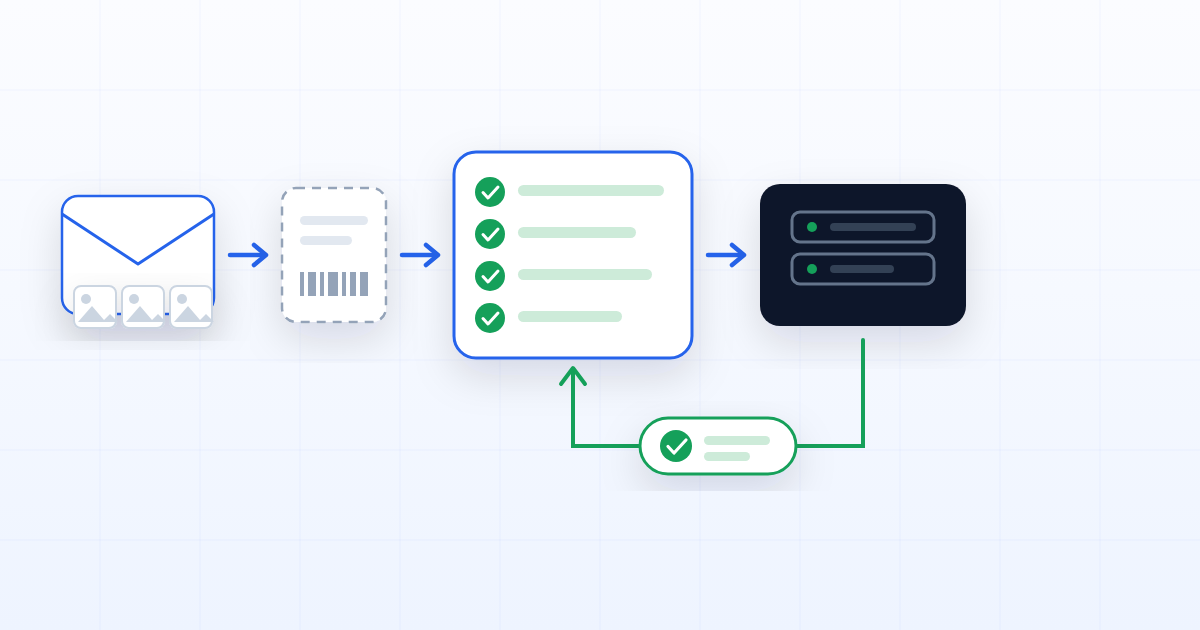
An accident is reported by email, with photos attached. Nobody creates a case, nobody picks a process, nobody retypes anything into the policy system. This is what a complete automation looks like when every step of it is a control rather than a script.
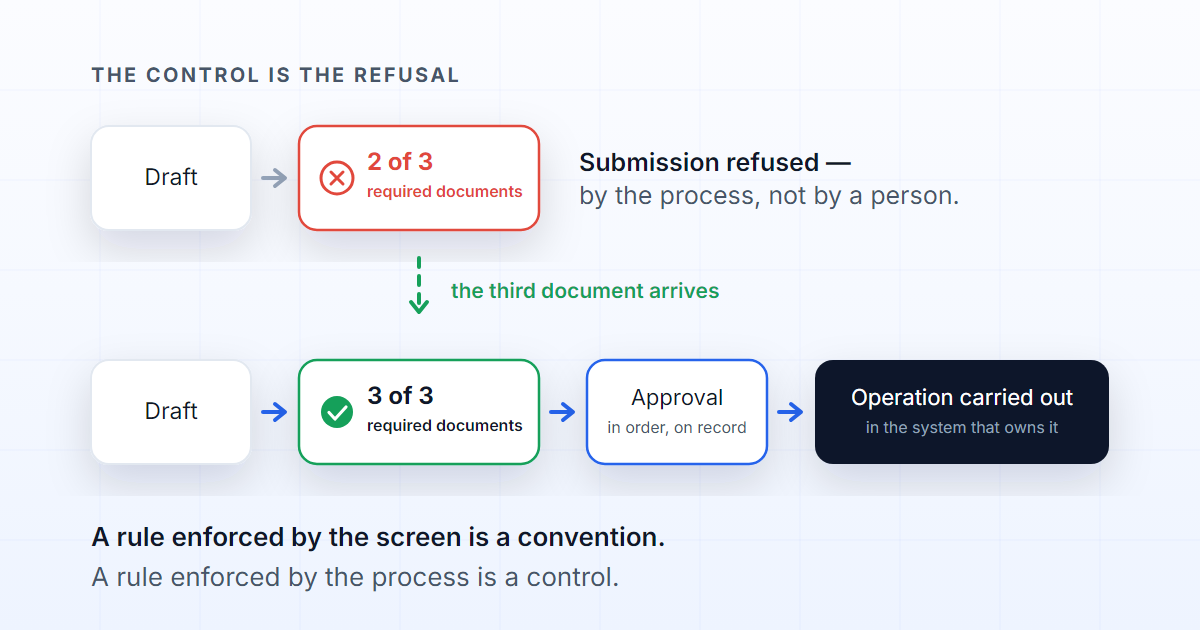
A document process is controlled when four things are true: the rules are enforced by the system, incomplete work cannot advance, decisions are recorded with authority, and the process ends by carrying out the operation. Everything else is a convention people follow until they are busy.
The usual way to collect documents from a customer is an email listing what to send. The better way is a link to the dossier itself — already prepared, already organised, with a place for each thing and a field for each answer.
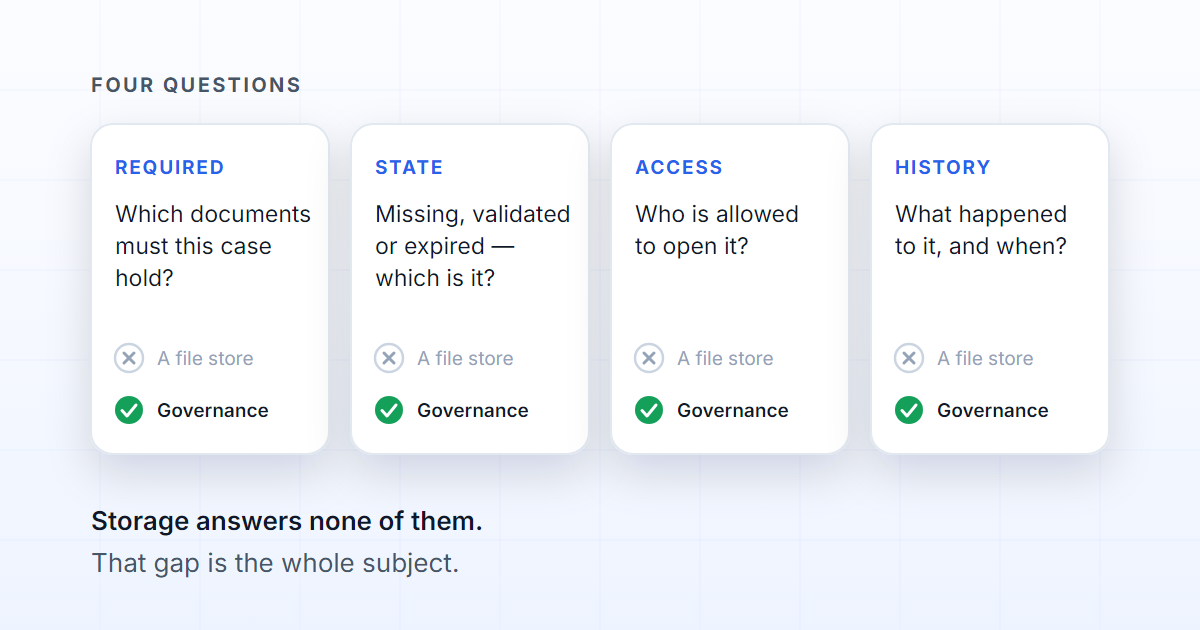
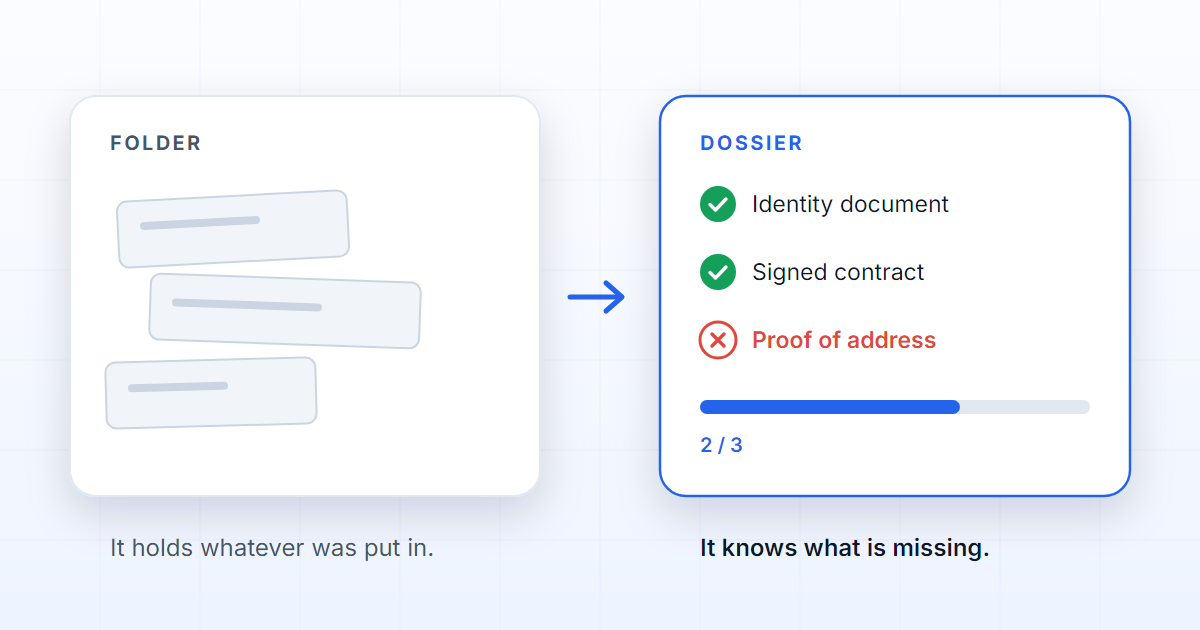
Document governance is the practice of making an organisation's documents answer four questions — which are required, what state each is in, who may open it, and what has happened to it. Storage answers none of them.
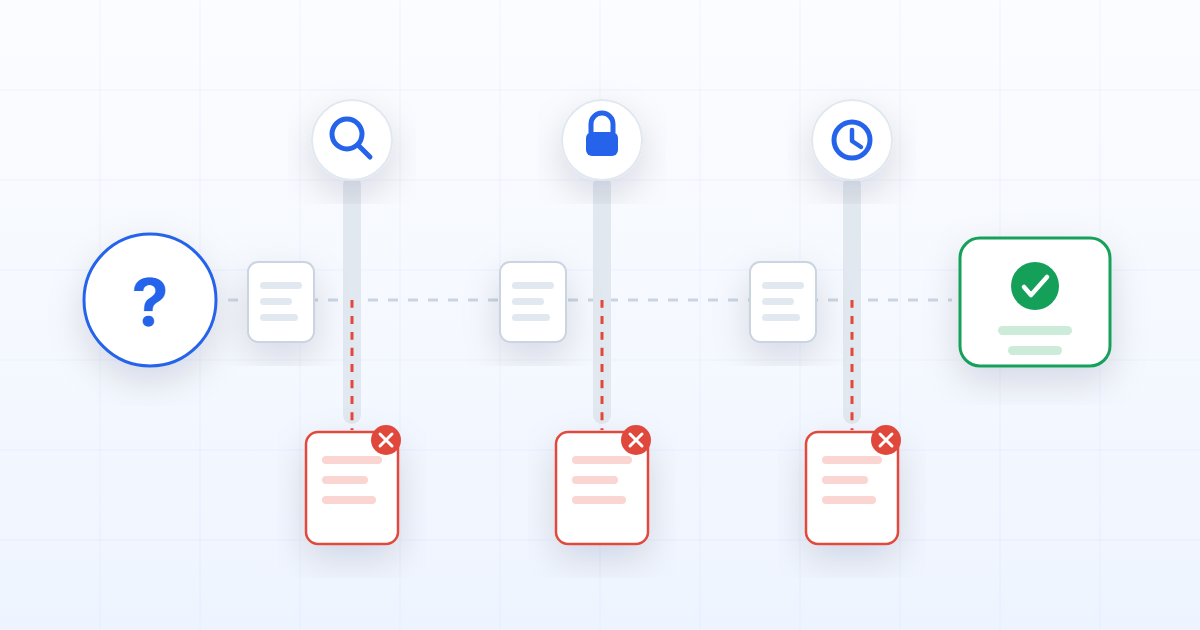
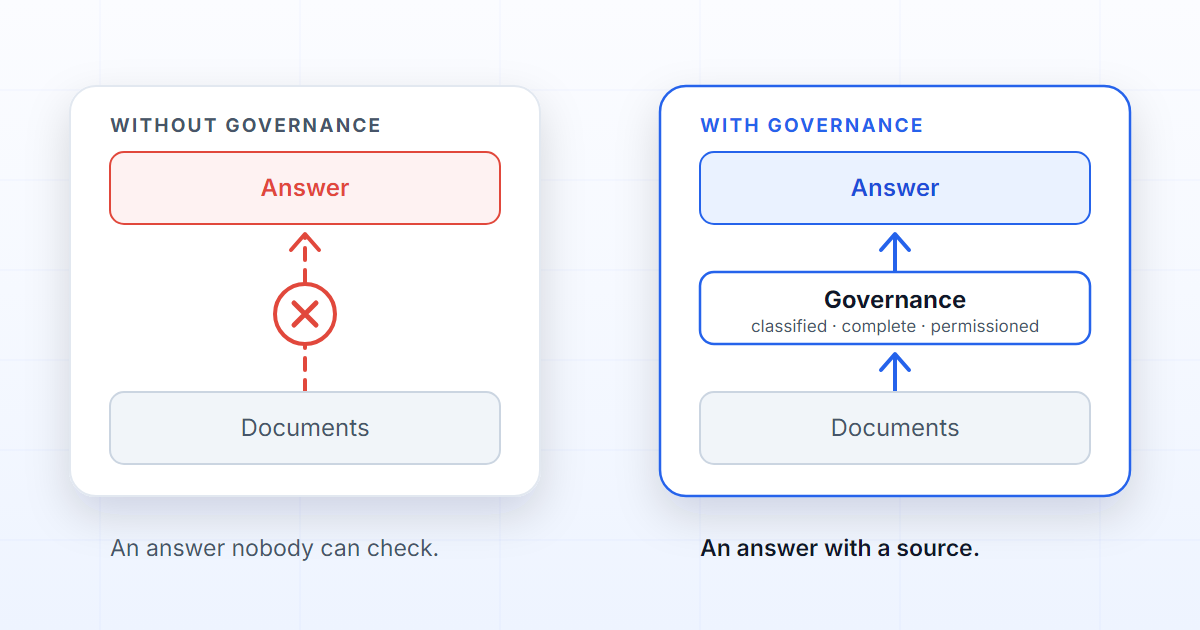
An assistant that reads your documents will answer from whatever it can reach. Three things decide whether that answer is right — what it retrieved, whether the reader was allowed to see it, and whether the document was still current.
In most organisations a case is complete when somebody says so. That is a judgement, and judgements do not scale, do not audit and do not survive the person who made them. Completeness should be a property the system evaluates.
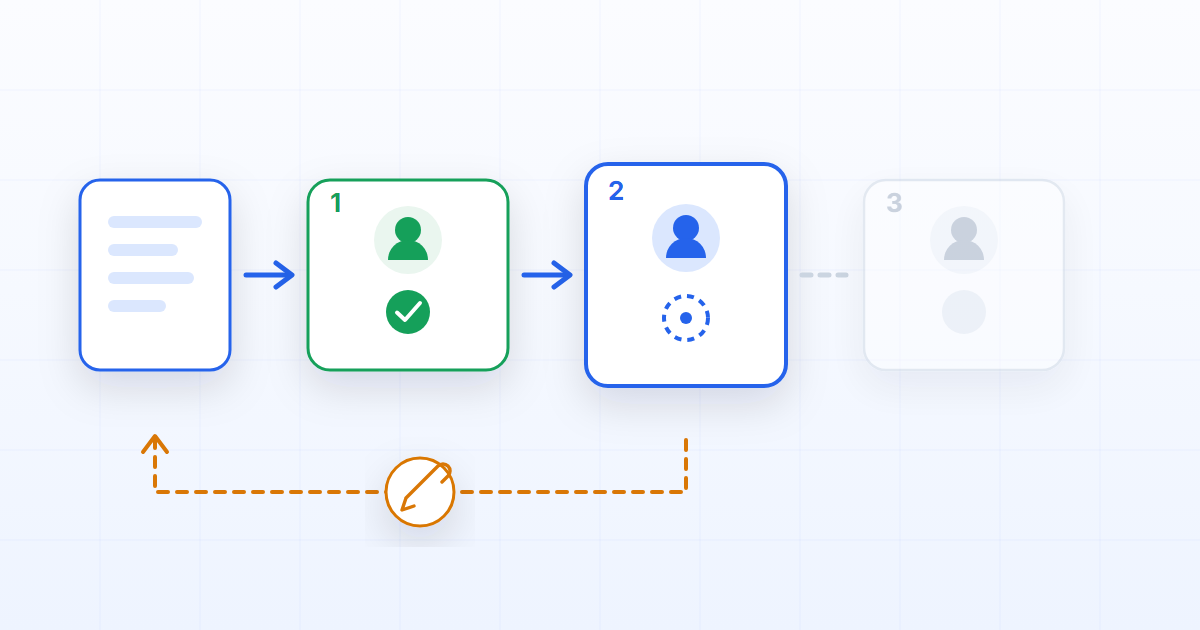
Collecting approvals is easy. What makes them mean something is that each approver had authority, took their turn in order, and decided against a case that could not change underneath them afterwards.